
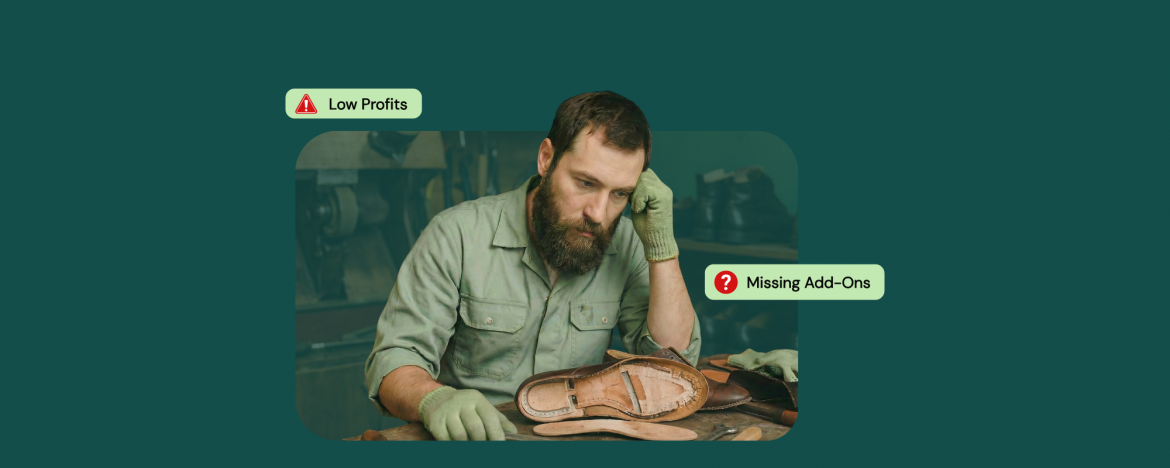
Most drops in shoe repair shop profit don’t come from one big disaster. They come from small habits that repeat every day, like a rushed quote, a free redo, a missed materials charge, or a pair that sits unclaimed for weeks.
If you have been feeling squeezed, it’s usually a pattern of shoe repair shop mistakes, not a lack of customers. The upside is that once you can spot the pattern, you can fix it fast without changing your whole operation.
A simple rule helps. Treat every repair like a mini job with clear boundaries, consistent notes, and a pickup routine that protects your time. With shoe repair shop software, those rules can live inside the workflow so the team follows the same playbook even on busy days.
The 7 Mistakes that Kill Profit in a Shoe Repair Shop
Most profit leaks are not dramatic. They are quiet. They show up in the same spots every week, and you only notice them when you look back and wonder why the register feels busy, but the bank account does not. Here are a few patterns that usually sit behind that feeling, and once you can name them, you can tighten them up without changing how you work or what you stand for.
1) Underpricing Small Jobs that Add Up
Tiny repairs feel harmless, but they stack fast. A quick glue touch-up, a simple stitch, a minor patch, or a basic clean can eat minutes of bench time, materials, and mental energy. If those jobs get priced like favors, they start crowding out the work that actually pays well. The objective is not to become expensive overnight. It is to become consistent.
Start by setting a minimum labor floor for any job that touches the bench, even if the customer calls it quick. Then build your shoe repair pricing around time blocks, not vibes. Ten minutes has a price. Twenty minutes has a price. Materials are not included unless you decide they are.
A simple habit that helps a lot is tracking two numbers for a week. How long the job really took and what you charged. If the gap shows up again and again, you have your first profit leak.
2) Saying Yes Without A Clear Scope
This one hurts because it looks like great service. A customer asks for one thing, you agree, and halfway through, you find the real issue. Now you either eat the extra time or try to explain a higher price after the work is already in motion. This is one of the most common shoe repair shop mistakes because it feels helpful at the moment, but it quietly turns into unpaid labor.
The fix is a clean intake habit that slows the job down for thirty seconds. Confirm what the customer wants done, check for hidden work, then say what is included and what would change the price. This is also a habit worth building early when you are starting a shoe repair business, because it keeps expectations clear before any work begins.
A simple rule that works is writing two short lines on every ticket. One line for what is included. One line for what is not included. It prevents awkward surprises and keeps your bench time paid.
3) Letting Materials Slip Through the Cracks
Materials leak profit in two ways. You forget to charge for them, and you lose track of them. Adhesives, toppers, thread, nails, edge dye, and even sandpaper look small until you add them up over a month.
Big retailers call this shrink, and it is not a rounding error. The National Retail Federation reported an average shrink rate of 1.6% in FY 2022, which they estimated as $112.1 billion in losses. That is a reminder that small losses, repeated, become real money.
Pick five high-use items and track them for two weeks. Then set one clear rule for each common repair that says when materials are included and when they are billed as an add-on. Most shops stop the drift just by making it visible.
4) No Standard Repair Packages
When every quote is custom, every quote depends on who is at the counter and how busy it is. That is where inconsistency sneaks in, and it usually ends in discounts or hesitation that slows the line.
Packages fix this because they remove debate. Build three tiers for your most common repairs and define what each one includes, like basic, premium, and rebuild levels for heels, resoles, and stitching.
This also tightens shoe repair pricing because you are charging for outcomes you can repeat, not guessing on the spot. You can still customize when a job is unusual, but you start from a solid baseline instead of a blank page.
5) Comebacks Not Logged as a Pattern
A comeback costs more than the redo. It steals bench time, pushes other jobs back, and turns a simple repair into a messy conversation. The bigger problem is when each comeback gets treated like a one-off event.
Log every comeback with a plain tag. Bond failure, stitching failure, customer expectation mismatch, or wear pattern issue. No blame, just a label.
Then review the tags once a week for ten minutes. If the same tag keeps showing up, you have a process issue you can actually fix, whether it is prep, materials, or how the job gets explained at drop off.
6) Poor Pickup Handoffs
Pickup is where profit gets protected or given away. A rushed handoff creates unpaid touch-ups, awkward refunds, and unclaimed pairs that sit in the back while your cash stays stuck in inventory.
This is one of the quiet killers of a shoe repair shop profit because the shop feels busy, but the money does not land cleanly. The repair is done, yet the job is not closed.
Make pickup a short routine. Show the work, get a quick approval moment, and confirm care notes if the repair needs a short break-in period. Then keep unclaimed pairs on a simple follow-up schedule so finished work does not turn into dead stock.
7) Missing Easy Add-Ons at the Counter
Most shops have extra revenue sitting right next to the register. Laces, insoles, heel grips, polish, waterproofing, and suede care kits. These are not pushy when they are tied to what the customer already came in for, and even a small set of accessories to sell at a shoe repair counter can raise the average ticket without changing how you operate.
The key is to offer one relevant add-on, not a shopping list. If the heel was slipping, mention heel grips. If the sole wore fast, mention a protective sole layer, and if leather looks dry, mention conditioner and how often to use it.
Give the team one simple line that feels helpful. Something like, “Do you want to protect the repair so it lasts longer.” When it sounds like care, not selling, customers usually say yes.
Quick Training Plan for the Team
The goal is to build habits your team can repeat during a normal week, not to run a long training session that nobody remembers. Most shoe repair shop mistakes come from rushing or guessing under pressure, so this plan keeps things short, practical, and easy to repeat.
Before you begin, choose three numbers you will track for two weeks so you can see whether the plan is working. Track average ticket value, the number of comebacks, and how many pairs are sitting unclaimed at the end of each day.
1) Day 1
Focus on quoting small jobs with consistency. Agree on a minimum labor floor for anything that touches the bench, then practice a few quick role plays so everyone gets comfortable saying the number without hesitation.
2) Day 2
This day is about scope, so nobody commits to work that was never priced in. The team should use the same two intake questions for every drop off, then write one short included sentence and one short not included sentence on each ticket before the item moves to the bench.
3) Day 3
This will be a materials day, because small consumables create big leaks when they are not tracked. Choose five high-use items, do a simple count at the start and end of the day, and set one clear rule for when each item is billed as an add-on.
4) Day 4
This is where you tighten shoe repair pricing by building repair packages that the team can quote without guessing. Create three packages for heels and three for resoles, then have everyone quote the same example repair to make sure the numbers match.
5) Day 5
Turn comebacks into signals instead of random headaches. Every comeback should be tagged with a plain reason, and the team should spend ten minutes reviewing what happened and what will change next time.
6) Day 6
Improves pickup, so finished work actually turns into paid work. Agree on a short pickup routine, make sure the customer sees the repair before leaving, and set a simple reminder habit for pairs that are still on the shelf after a few days.
7) Day 7
This day is about add-ons that feel helpful, not pushy, and it is also where you protect the shoe repair shop profit on busy days. Pick four add-ons that match your most common repairs, and give the team one natural sentence for each offer so it comes out the same way every time.
After the first week, keep this going with a five minute huddle once a week. The point is repetition, because repetition is what turns a good plan into muscle memory.
Conclusion
Protecting a shoe repair shop profit is not about working longer hours or cutting corners. It comes from tightening the small decisions that happen every day, especially at the counter and during intake. When you stop underpricing quick work, define the scope before you start, and keep materials from slipping through, margins improve without changing the quality of your craft. Most shops do not need a full overhaul. They need consistency. With clearer shoe repair pricing, clean handoffs, and a simple routine the team follows, the shop feels calmer, and the money starts landing right.
FAQs
1) What is the biggest reason a shoe repair shop loses profit?
The biggest reason is inconsistency. Shops often lose money through underpriced small jobs, unclear scope, missed material charges, and repeat comebacks that never get tracked as a pattern.
2) How do I price small shoe repairs without scaring customers away?
Set a minimum labor floor and price by time blocks. Customers usually accept fair pricing when you explain what the repair includes and why it holds up, instead of treating the job like a quick favor.
3) How can I reduce comebacks in my shoe repair shop?
Log every comeback with a simple reason like bond issue, stitching issue, or expectation mismatch. Review the reasons weekly and adjust your prep steps, materials, or intake explanation so the same problem does not repeat.
4) Should a shoe repair shop offer standard repair packages?
Yes. Packages keep quotes consistent, reduce discounts, and make it easier for staff to explain options. A basic, mid, and premium tier for your top repairs usually covers most cases while still leaving room for custom work.
5) What are easy add-ons that increase revenue at the counter?
Offer add-ons that match the repair, like laces, insoles, heel grips, polish, waterproofing, or care kits. Keep it to one relevant suggestion per customer and frame it as protection for the repair, not a sales pitch.


