
Is small engine repair still a good business in today’s world?
Ask ten business owners and you’ll get ten different answers. Many people think small engine repairs are easy money. In reality, most are wrong.
The truth is simple: starting your own small engine repair business can be a great thing only if you go in with clear expectations. It’s not just about fixing snow blowers, lawn mowers and chainsaws, but skills, pricing, customers, and knowing when to stay small or grow big.
Today, we will let you know how to start your small engine repair business from insights gathered from experienced professionals who have already lived through the wins and the headaches.
In addition, you will learn how small engine repair shop software can help you eliminate manual methods and automate all the ongoing processes.
Let’s dive in.
1. Is Small Engine Repair Still Worth It?
According to industry estimates, on average, a small engine mechanic makes $48,240 yearly. So, for someone who is fixing small engines as a side hustle, it’s a great venture.
But not for everyone.
Experts agree that small engine repair works best if you enjoy the work. You can start it in your backyard and scale it over time.
Specifically, if you buy old or used handheld blowers, and riders, fix them and then sell them, you can make even 5x profit.
Thus, small engine repair is totally worth it if you do it the right way, love your job, and know how to build more revenue streams.
The main question will not be “Can I start?” but “How big do I want to go?”
2. Skills Come First
Just like every business, if you are planning to start a small engine repair, you must learn first what you are doing.
Small engines may look simple. However, even a small mistake can cost you money and reputation. Therefore, before you invest, you should understand:
- 2-stroke and 4-stroke engines
- Fuel, air, lubrication, governors, and spark basics
- Carburetors, ignition systems, and compression
- Common failure points in generators, lawn mowers/riders, chainsaws, and blowers
Because tools alone will not make you an expert in this field but experience will. Start today by fixing your own equipment or helping friends and family members before charging strangers.
3. Tools You Actually Need
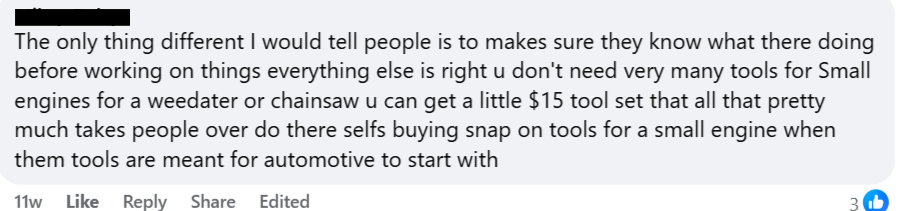
According to experts, one does not need expensive tools to start. Instead, you need to have the right small engine repair tools that can help you with every repair job.
Rather than wasting money on high-end tools, you can get yourself a basic toolset that includes:
- Basic socket and wrench set
- Screwdrivers and pliers
- Compression tester
- Smart plug tester
- Carburetor tool
- Ultrasonic cleaner
- Digital tachometer
- Multimeter
So, start small, invest smartly, and upgrade your tools only when your work demands it.
In addition, you must also equip lawn mower shop software at your workplace. Using its repair ticket management feature, you can log every job and track it from start to finish. When done, the system automatically sends repair status updates to customers. So, you can always keep them in the loop, enhancing communication.
4. Common Small Engine Repairs to Focus On
You will often encounter issues in small engine repair jobs that are common. In fact, a small number of issues make up most repair work. Here are some of the most common small engine repairs you should focus on:
Carburetor Cleaning and Rebuilds
This is one of the common issues that occur in lawn mowers, and other types of small engine jobs. Old fuel, dirt, and clogged jets cause hard starting.
Spark Plug Replacement
A simple but very common fix. Worn spark plugs can stop an engine from starting or cause misfires.
Ignition Coil Problems
Most of the time when there is spark loss, the ignition coil is often the cause. Testing and replacing coils is a regular part of small engine diagnostics.
Fuel System Issues
Cracked fuel lines, dirty fuel filters or bad fuel are very common. Replacing lines and filters is routine work in small engine repair.
Pull Cord and Recoil Starter Repairs
Broken pull cords and worn recoil springs happen often. These repairs are simple but can be time-consuming. So, they should be priced properly.
Engine Won’t Start or Dies After Starting
This is also one of the common customer complaints. The cause is usually fuel-related, but proper diagnostics are important to avoid guesswork.
By focusing on these common repairs, you can earn decent revenue and build customer trust.
5. Licenses, Zoning, Insurance, and the Reality of Red Tape
This is the most important thing to focus on when starting your repair venture. First, you should understand that there is a major difference between doing repairs for friends and neighbors, compared to running a registered small engine repair business.
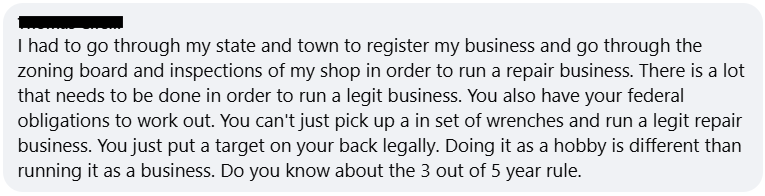
To start a legit business, you may require:
- Business registration
- Zoning approval
- Shop inspections
- Insurance
- Permits
That’s why it’s vital to know your local laws before you start. Even in some towns, backyard repair shops are not allowed at all. So, running a business without permission and legality can cause serious problems in the future.
6. Parts, Suppliers, and Certifications
Finding quality parts is important. For that, you need to find and order only from top small engine repair parts suppliers. Please note that some suppliers may require a vendor license.
It’s also worth noting that to ensure your customers get timely repairs, you are always on top of your inventory, and are never out of stock. For that, you can get help from inventory management software as it will always notify you whenever a part or product falls below a minimum threshold. This way, you can better manage your inventory, and deliver timely repair services.
7. Pricing, and Diagnostic Fees
This is something on which multiple experts focused. According to them, one should not offer free diagnostics as it attracts bad customers.
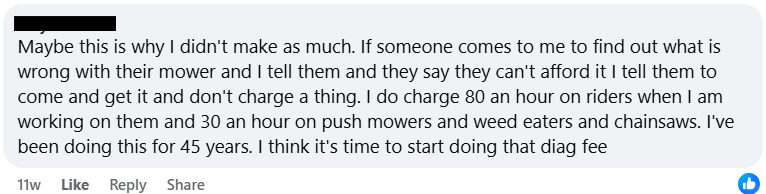
If you inspect the machine, that is work. And for that, you deserve payment. Therefore, professionals recommend charging:
- A diagnostic fee upfront
- Hourly rates for repairs
- Quote clear pricing before starting the repair
As a result, this will help you avoid wasted time, filter serious customers, and set clear expectations.
You can create estimates for customers, making it easier to provide them with cost information for repair services. Similarly, you can either absorb the diagnostic fee into the final bill if the customer approves repairs or keep it separate. What matters most is being clear from day one.
8. How to Find Customers Without Huge Advertising Costs
Now, the last part is about finding the customers without spending huge amounts on advertising.

Most small engine repair shops have suggested growth through:
- Word of mouth
- Social media groups
- Local referrals
You can also partner with landscapers or buy broken equipment, fix it, and sell it for a decent profit. This way, you can make money and get experience without dealing with customer complaints.
Along with that, you can also leverage a marketing automation tool as it will help you send promotional SMS and emails to specific customer groups. So, they would know what repair services you offer and accessories you sell.
9. Gas vs Electric Equipment

Regarding gas vs electric equipment, people have mixed opinions. Some believe small gas engines are disappearing, others think the opposite.
The reality is:
- Electric equipment is growing
- Gas engines are still widely used
- Repairs will continue for years
So, being a smart repair business owner, you should stay flexible and focus on both types of equipment.
Final Words
Running a small engine repair business is not easy money. In reality, it takes skill, patience, and the right business approach. However, if you are passionate about lawn mowers, snowblowers, and generators, it can be rewarding, both financially and personally.
The key is to treat it like a business, not just a hobby. Also, don’t forget to use repair shop software as it will help automate daily operations, saving you time and reducing hassle.
If you go in prepared, stay realistic, and keep learning, a small engine repair business can be absolutely worth it.
FAQs
1. Is It the Right Time to Start My Small Engine Repair Business or I am Late Now?
Small engine repair is still very much in demand. it’s a billion dollar industry that keep expanding with every passing day.
If you learn the skills, price your work correctly, and treat it like a real business, there is still plenty of opportunity. A number of successful shop owners started small, worked from home, and grew step by step. so, the right time is not about the year, but being prepared, and ready to do quality work.
2. Do I Need to Buy Modern and Expensive Tools to Start with Small Engine Repair Business?
No, you don’t need to invest in high-end or modern tools right away. A starter toolkit would do just fine that can include:
- Socket and wrench set
- Screwdrivers
- Compression tester
- Smart plug tester
- Carburetor tool
- Multimeter
- Tachometer