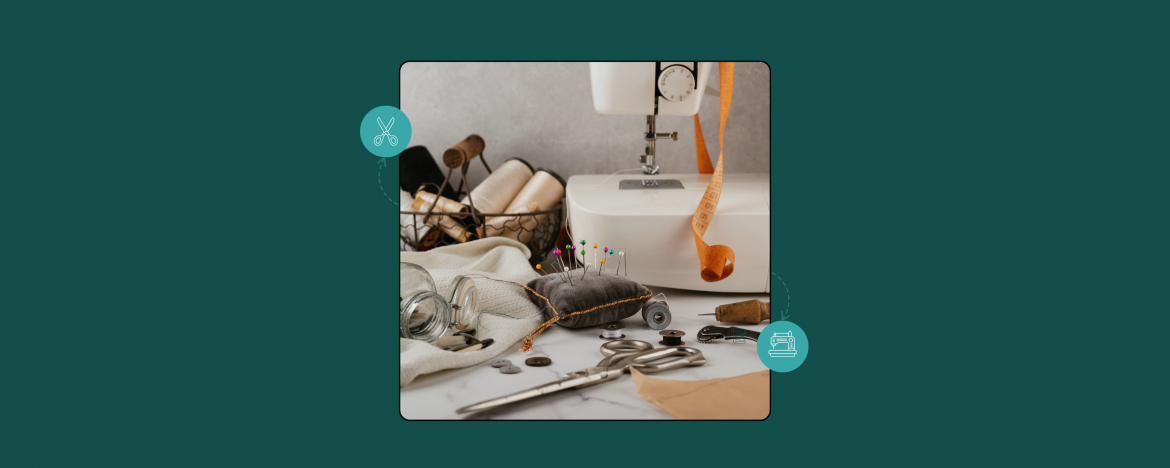
Running a tailor shop is not just about stitching clothes, it’s about delivering accurate fits, and faster turnaround times. Many tailor shops lose accuracy, time and money simply because they don’t use the right tools.
Every day, customers walk into your boutique with different fabric types, designs, and expectations. Just like any skilled craft, tailoring becomes smoother when you have the right sewing tools by your side.
If you’re starting your tailor shop or upgrading your setup, this list will guide you through the top ten essential tools you need to work efficiently.
Also, to manage your tailoring business, you need a reliable tailor shop management software, as it can help you handle jobs, manage inventory, appointments, and payments.
If you want to see how real businesses improve operations using such a software, check out how A Stitch in Time runs a sewing machine repairs. This will help you understand how structured workflows can simplify daily operations.
Let’s begin.
1. Sewing Machine
First things first, you need a sewing machine at your tailor shop that offers all the necessary features to suit your needs. If you want a reliable machine, you can go for the ones made by Singer, Brother, Janome, and Bernina. These brands are known for reliability and user-friendly features.
In the same way, high-end or industrial options are also popular, including Juki, Pfaff, and Husqvarna Viking. What matters most is your requirements and wish list. You can buy the one that fulfills your list.
Even then, if you are unsure, you can look for the best sewing machines and then choose the right fit for your tailor shop. But even the best sewing machine cannot produce accurate results without proper measurements.
2. Measuring Tape
One of the most important tools of any tailor is their measuring tape. If you don’t have it, you don’t get accurate measurements. And without accurate measurements, even the best stitching can go wrong.
The measuring tape is easy to use and flexible, and you cannot find a single tailor who doesn’t own a measuring tape. You can use it to measure chest, waist, sleeves, length, and more. It’s simple, but one of the most important tools you’ll use every day.
Once measurements are taken, the next step is marking the fabric clearly before cutting.
3. Chalk
Tailor’s chalk helps you mark fabric precisely before cutting or stitching. You can draw lines, make adjustments, and plan your cuts clearly. These are washable and affordable, so you can stock them in large quantities.
To keep track of your stock, you can get help from inventory management software as it notifies you when you are low on stock, helps you transfer inventory between locations, and forecast demand. Thus, you can maintain adequate inventory all the time.
4. Pattern Paper
A paper pattern is a vital but mostly forgotten sewing tool at tailor shops. You can make clothing patterns by hand by taking measurements or tracing your existing clothes.
Using a roll of pattern paper is simple and one can find different types of pattern papers that are used for different types of fabric. For instance, a fabric like tulle requires a sturdy pattern compared to silk that prefers a lighter paper such as tissue.
5. Steam Iron
As a professional tailor, you can go an extra mile to make a lasting impression on your customers. For that, you can use a steam iron to remove the stubborn wrinkles from the finished product.
So, till now, if you don’t have an iron at your shop, buy one to give garments a neat and finished look before delivering them to your clients. After pressing and finishing fabric, the next critical step is precise cutting.
6. Shears and Cutting Tools
Tailor’s shears are not just regular scissors. They are a precision tool made specifically for cutting fabric with accuracy, precision, and control. When you run a tailoring business, clean cutting holds a lot of importance because even a small mistake can affect the final fit of a garment.
When you have good quality shears, they can glide through fabric smoothly without pulling, tearing, or fraying the edges. This is important when working with delicate materials like chiffon, silk, or georgette, where rough cutting can damage the fabric.
Contrary to this, when handling fabrics like denim or wool, strong and sharp shears reduce effort and give you better control.
7. Thimble
A thimble is a small tool in any tailor shop and it’s highly practical. You can wear it on your finger to protect it while hand stitching. Although sewing machines handle most work today, hand stitching is still vital for finishing, especially in custom tailoring.
Thimbles come in different materials. These include metal, plastic, and leather. Most tailors prefer metal thimbles as they are durable and offer strong protection. In the end, choosing the right type depends on the kind of work you usually do in your fashion boutiques
8. Threads and Needles
No matter how advanced your sewing machine is, the quality of the garment still depends on the right combination of thread and needle. Without a doubt, they directly affect strength, and appearance of the stitching.
Threads come in different types, thicknesses, and materials. For instance, cotton threads are used for natural fabrics and polyester threads are used for everyday garments.
Needles also vary depending on fabric type and stitching purpose. Using the wrong needle can damage the fabric and break the thread during sewing. The right choice improves strength, appearance, and overall quality of the final product.
With the right threads and needles, every stitch becomes stronger and more durable. However, stitching quality also depends on proper finishing techniques.
9. Rulers
Rulers are also one of the vital tools you should have at your shop. You can use them to draw straight lines, mark hems, and create precise patterns on fabric.
Tailors use different types of rulers including straight, L-squares, and curve rulers. Each of these has a specific purpose and they help improve the overall finishing quality of garments. So, pick according to your requirements
10. Pressing Ham
At number ten, we have pressing ham. It is one of those tools experienced tailors know how critical it is for achieving a professional finish. It is a tightly stuffed, rounded cushion used while ironing garments, especially in curved or shaped areas.
The purpose of a pressing ham is to help shape fabric without flattening its natural curves. Its dual surface makes it versatile for different types of fabrics and ironing needs.
Final Words
Running a successful tailoring business is a skill that depends on precision, and the tools you use. The above-mentioned sewing tools will help you enhance accuracy, quality and ensure every job is timely completed.
When you combine them with a smart automation system like RepairDesk, you also improve the way your entire business runs. Start using it to save time and increase efficiency.
FAQs
1. Which is the Best POS System for Alterations or Tailoring Business?
The best POS system tailoring or alterations businesses depends on your workflow, size, and how you manage orders. It should help you manage appointments, orders, inventory, employees, invoicing & billing, payments, and mail-in orders from one place.
RepairDesk can be a great choice as it allows you to manage alteration tickets, track customer history, handle inventory, and streamline daily operations. The platform is easy to use, and holds a solid reputation on review platforms.
2. What are the Best Sewing Tools and Accessories I should have in my Shop?
the best sewing tools you can have include a sewing machine, marking tools like chalk, pattern paper, steam iron, sharp shears, rulers, and good quality threads and needles. These tools help you work faster and ensure professional finishing on every garment.