

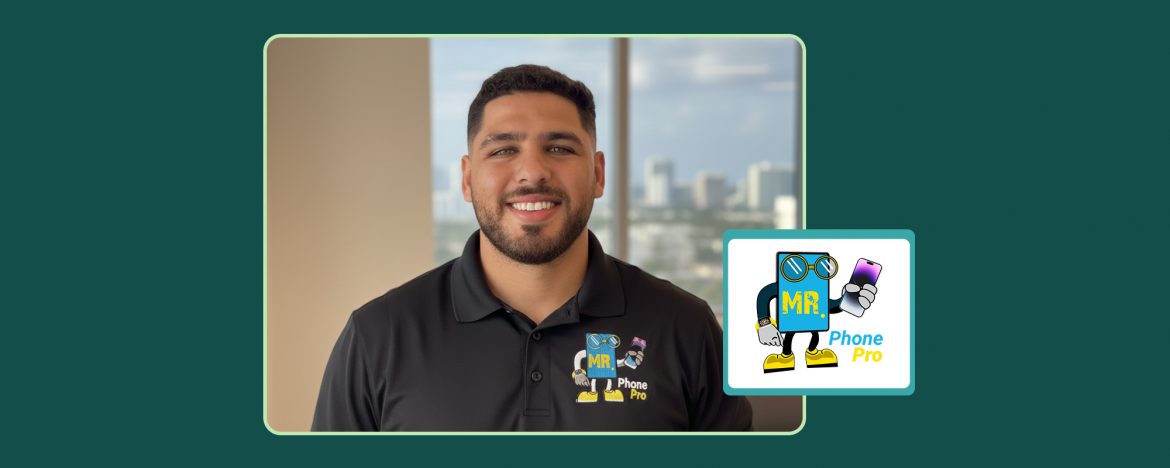
How do you scale a repair shop when every missed call is a customer gone?
For Saber Abdel, owner of Mr. Phone Pro, growth didn’t come from chasing volume in-store. It came from building a system that can handle a constant stream of price shoppers, online buyers, and repair customers without letting leads slip through the cracks. With a one-store team and a strong online sales engine, that meant tightening follow-up, capturing missed opportunities, and running a cleaner operation using RepairDesk as a core tool.
Business: Mr. Phone Pro
Specializes in: Samsung, iPhone, iPad, and game console repair, plus wireless device sales.
Location: Lakeland, FL, United States
The Business
For Saber Abdel, the repair industry has been a long game. He’s been in it for about 14 years, got started young through his uncle, and stuck with it because he genuinely loves the work.
Today, Mr. Phone Pro operates from Lakeland with a single physical location and a team of seven. But the business is not built like a typical one-store repair shop. Saber runs a model that leans heavily into online device sales, with the retail store supporting the brand and the day-to-day customer experience.
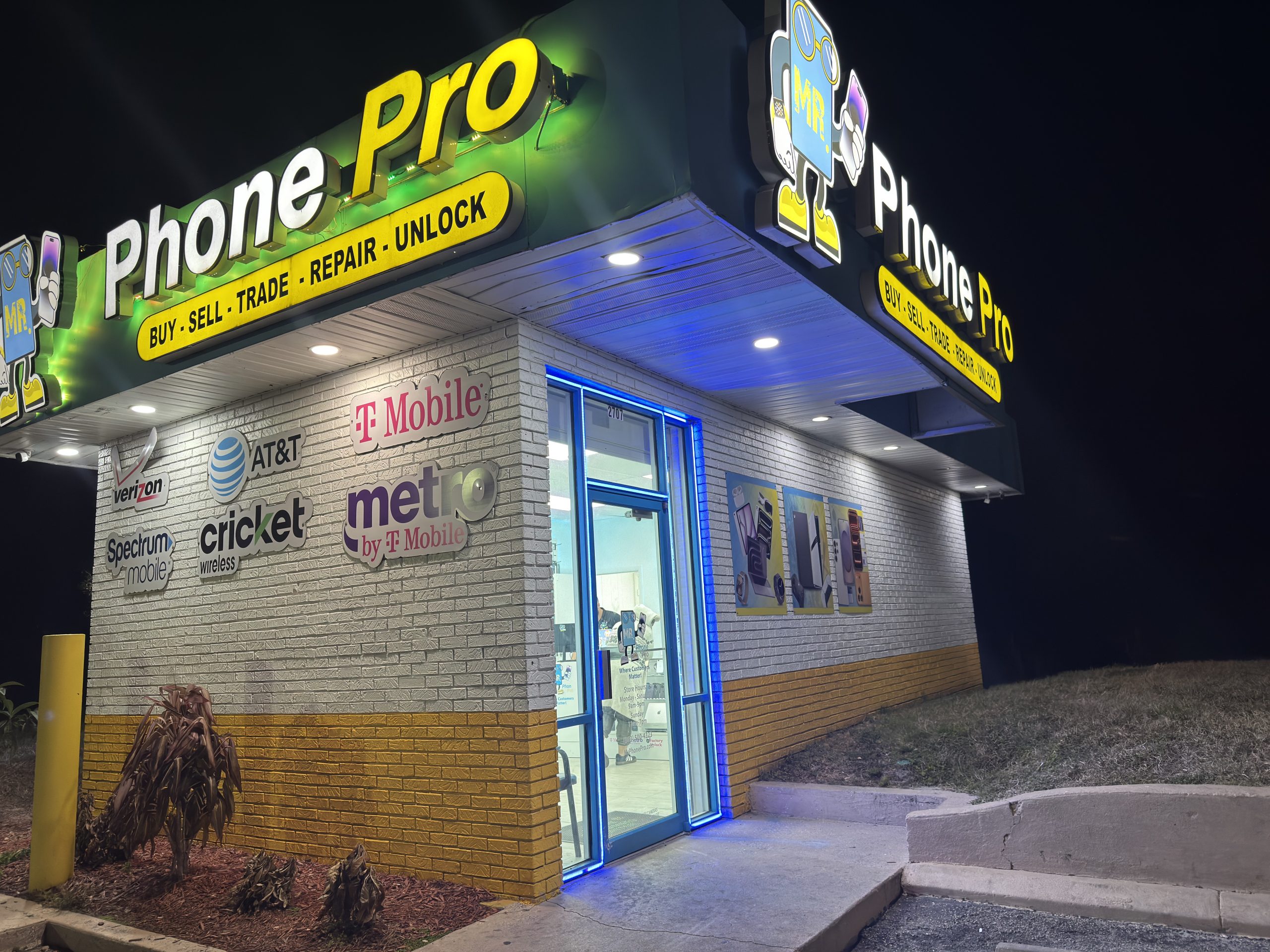
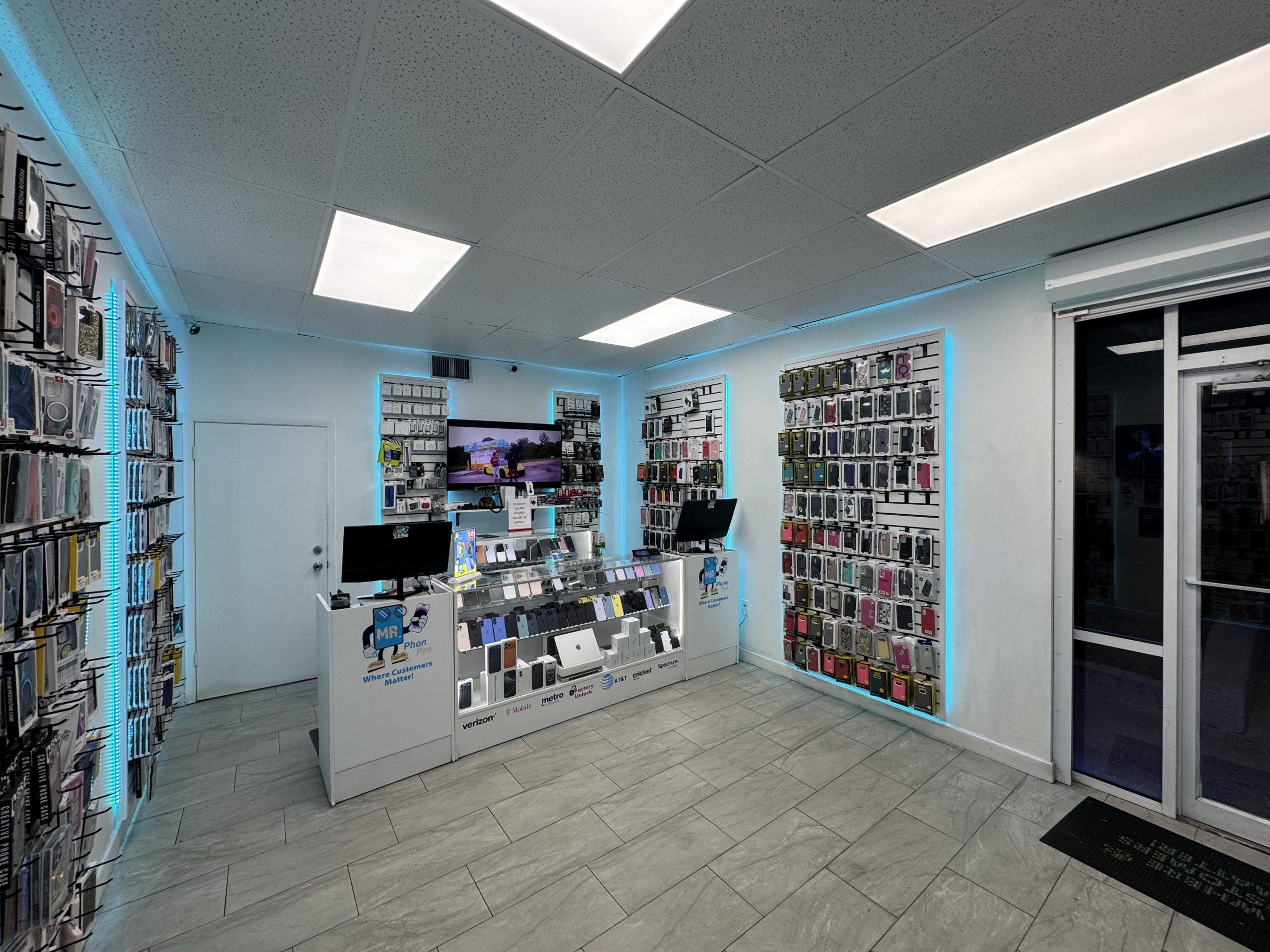
On the ground, the shop positions itself as a one-stop destination for wireless needs and device repair, covering services like unlocks, screen repairs, battery replacements, button repairs, and water damage fixes, along with broader repair coverage across major device categories.
Saber is also the kind of owner who stays obsessed with marketing and brand presence.
“You gotta fall in love with your own brand because you are gonna be the face, the marketing behind your brand,” says Saber. “A lot of times, owners and founders, your job is 99% of the time just marketing your own company.”
But for that attention to convert into revenue, the operation has to keep up. When call volume spikes and customers shop around fast, the difference comes down to speed, follow-through, and how well the shop handles every lead that comes in.
The Challenge
Running a hybrid business with in-store repairs and nationwide online device sales creates a different kind of pressure. It is not just about fixing devices well. It is about responding fast, staying consistent, and following through on every lead before it disappears.
Saber kept running into the same pattern. Customers often call multiple shops back-to-back just to compare pricing. If your team misses that first call, you may never get a second chance. Missed calls are not a small inconvenience. They are lost revenue.
The challenge became bigger as the business grew. With a seven-person team, there are still moments when the front counter gets busy, and phones ring at the same time.
“Sometimes businesses get four or three calls ring in at the same time, and if they only have that one phone or two phones, they could miss the call easily,” says Saber.
Saber also knew that online sales bring their own operational friction, especially disputes and condition-related questions, which require clear records, quick responses, and consistent communication.
For Mr. Phone Pro, the focus was simple: put systems in place that keep responses fast and reliable, even when the shop is slammed.
The Solution
To keep operations consistent while managing repair work and online device sales, Saber needed tools that supported fast responses, clear communication, and reliable follow-through. That is where RepairDesk became a core part of the daily operation.
RepairDesk gave Mr. Phone Pro a system that could support customer handling at speed, without relying on memory or manual workarounds. Saber describes it as a big game-changer and credits it as one of the biggest tools used in the business every day.
A core part of the workflow is the RepairDesk Phone System, built to manage call traffic when things get busy and keep customer communication consistent. With RepairDesk Phone System supporting the phone workflow, the shop can reduce missed opportunities during peak hours and build a consistent follow-up loop that does not depend on who happens to be free at the counter.
The Workflow
RepairDesk sits at the center of how Mr. Phone Pro handles customer communication from first contact through follow-through.
When calls start coming in, the team can manage several active lines at once. If a customer calls after hours or the team cannot answer in time, missed call alerts help them respond quickly. This helped them from letting the lead disappear. “If a customer calls and we don’t answer, it instantly sends an email or a notification that we’ve just gotten a missed call,” says Saber.
For customers calling around for pricing, speed matters. An automatic text message with key info, such as the shop’s location, helps Mr. Phone Pro stand out, even when the customer is contacting multiple businesses in a row.
To keep things consistent day-to-day, Saber relies on a virtual assistant to monitor call handling standards. He also makes sure follow-ups don’t slip. The VA monitors calls, flags issues when standards slip, and ensures leads that say they will visit later still get a timely check-in.
Automation and Follow-Up
RepairDesk helps Mr. Phone Pro turn follow-up into a repeatable system instead of a manual habit that fades when the shop gets busy.
Saber specifically points to the RepairDesk Phone System as a key driver here. After the initial interaction, the team follows up with customers to check on their experience. If the response is positive, the message naturally shifts into a referral ask, helping turn satisfied customers into repeat business and word of mouth.
Saber has seen the impact firsthand. “There’s a lot of sales that have been made just based on the following up that she would do,” he says.
The Impact
When call volume rises, small gaps turn into real losses. A missed call during rush hour, a lead that never gets a follow-up text, or a customer who never hears back after hours. For Mr. Phone Pro, tightening that front door mattered because customers move fast and they do not wait around.
By using RepairDesk with its Phone System, the shop built more control into the moments that usually get messy. Incoming calls became easier to manage, missed calls were harder to ignore, and follow-up became something the business could execute consistently instead of hoping someone remembers.
- Fewer missed opportunities because missed calls trigger automatic notifications, and the team can respond fast even when the counter is busy.
- Faster conversion of price shoppers by sending store directions or repair quotes while the customer is still on the call.
- More consistent customer handling because RepairDesk Phone System can surface ticket context when an existing customer calls.
- Cleaner follow-through because calls can be logged and tied back to customers, so less depends on memory.
- Better after-hours coverage through call routing and handling missed calls in a structured way.
The shift was significant enough that Saber puts it plainly, “one of the biggest tools is RepairDesk. It’s a big game changer for us.”
The Takeaway
In a repair shop, growth is rarely blocked by a lack of demand. It is blocked by missed calls, slow follow-up, and inconsistent customer handling when the store gets busy. Mr. Phone Pro shows what happens when those gaps are treated like real operational problems instead of normal industry pain.
By building a workflow around RepairDesk and the Phone System, Saber created a communication process that stays responsive during peak hours and stays consistent after the first interaction. That combination helps protect revenue, supports repeat business, and keeps the customer experience steady as the business keeps moving forward.
Saber also believes the industry is changing fast, and shops that do not adapt will feel it. “It’s gonna get smarter. It’s gonna be different,” he says. “If you’re not gonna find ways of how to innovate yourself with it, you’re gonna be left behind.”


