

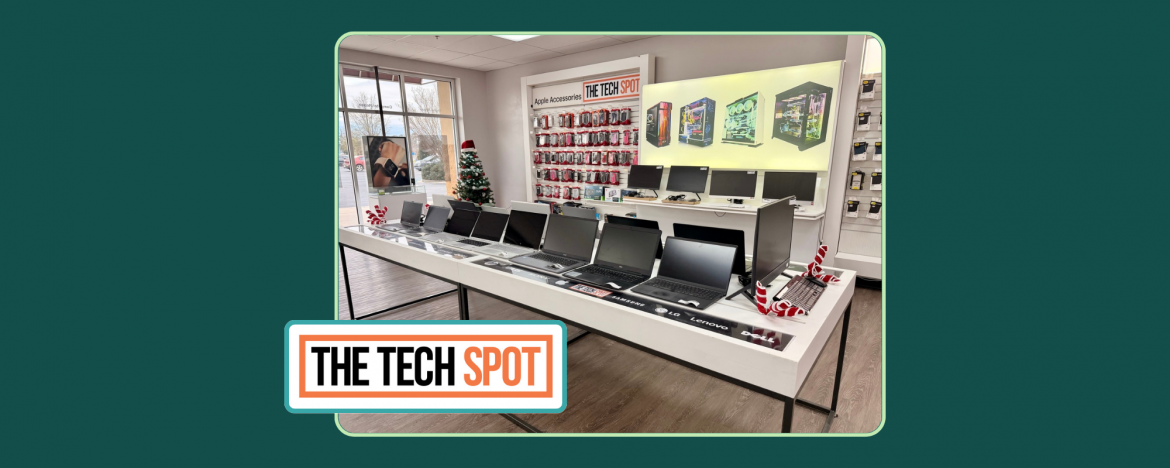
After outgrowing QuickBooks and running into support and workflow issues with legacy POS system, The Tech Spot switched to RepairDesk to better manage computer repair, cell phone repair, and retail operations.
| Business | The Tech Spot |
| Location | Greenwood, South Carolina |
| Specializes In | Computer Repair, Cell Phone Repair, MSP Services, and Retail Tech Sales |
| Industry | Computer and Cell Phone Repair Retail |
| Solution | RepairDesk – Repair Shop Management Software |
When A Repair Store Becomes Something Much Bigger
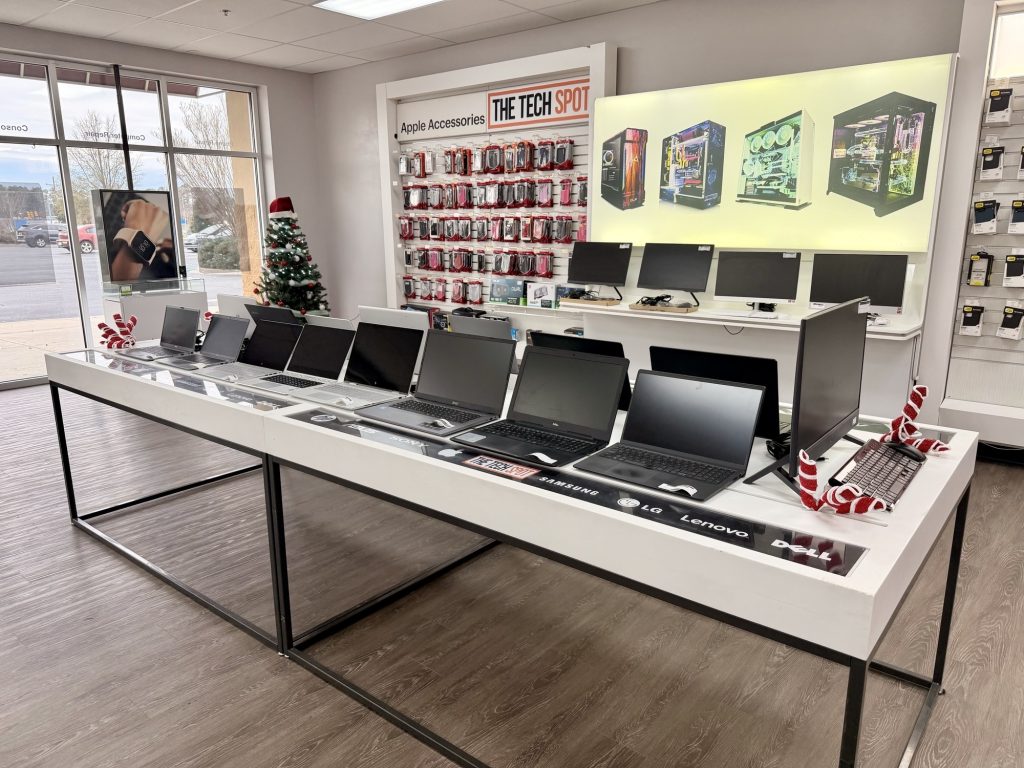
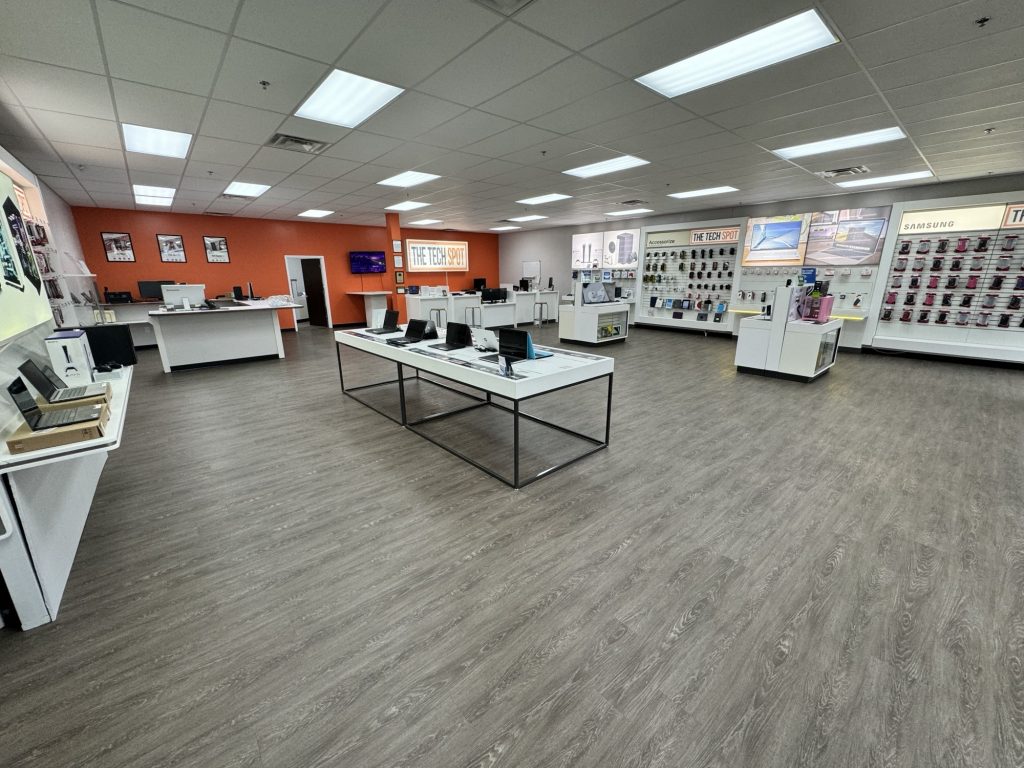
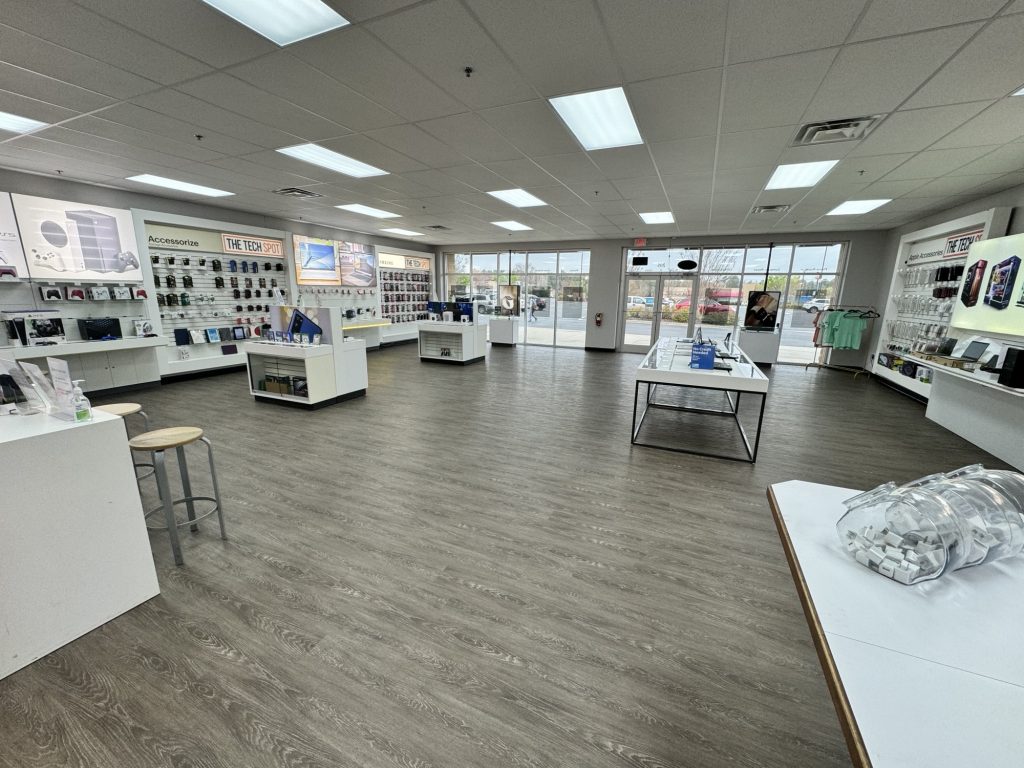
Walk into The Tech Spot in Greenwood, and it does not feel like a small repair counter. It feels more like a polished retail tech store. Cory Anderson describes a spacious 4,000 square foot setup with white fixtures, laptops on one side, monitors on the other, and walls lined with accessories and phone cases. That visual matters because it reflects what the business has become. This was no longer a simple repair operation. It was a larger retail and service business handling more customers, more inventory, and more day-to-day complexity.

That growth started before The Tech Spot existed. Cory originally ran Solutions IT, a computer-focused business offering break-fix work and MSP services. During COVID, the team stayed open as a necessity business and tripled its revenue while helping teachers, students, and families stay connected.
Around the same time, Cory saw rising demand for cell phone repair in the community and decided to open The Tech Spot with a bigger vision. Over time, the business brought computer repair, cell phone repair, MSP work, and retail sales together under one roof. As the operation grew more complex, the need for better computer repair shop software became impossible to ignore.
The Challenge: When the Software No Longer Fits the Shop
As The Tech Spot grew into a larger operation handling computer repair, cell phone repair, MSP work, and retail under one roof, the pressure on the business changed. QuickBooks had been part of the setup before, but Cory was clear that it was never built for a shop like this. It worked as a general business tool, not as computer repair shop software designed around tickets, service workflows, and the day-to-day demands of a busy repair business.
When the team later moved to a legacy POS system, the goal was to get capabilities like insurance and screen protection support, but the platform still did not match the way their shop actually operated. As Cory put it,
“It just wasn’t set up for us. It might be set up for a smaller owner-operator store, but it wasn’t set up for a store like us.”
That gap became even more obvious once daily operations were on the line. Cory said the legacy POS system felt better suited to a smaller owner-operator setup, not a larger store trying to manage MSP, computer repair, and cell phone repair at the same time. Support was one of the biggest pain points because the team had to rely on emails and tickets instead of getting fast help when they needed it most, especially with customers standing at the counter ready to pay.
On top of that, the migration itself became frustrating, with invoices, ticket history, and product data proving difficult to move cleanly. At that point, The Tech Spot did not just need another tool. It needed repair shop management software that could support a more demanding operation without slowing the team down.
The Solution: Bringing the Store Back Onto One Reliable System
Running a larger repair business becomes harder when the software behind it keeps creating friction instead of removing it. By the time The Tech Spot decided to switch, the team needed more than a platform with repair features on paper. They needed something reliable enough for a shop handling computer repair, cell phone repair, retail workflows, and customer communication at the same time. That is what brought them to RepairDesk. It gave the business one system that better matched the way the shop actually operated and made it easier to manage work without constant slowdowns. Corey said,
“We needed something that we have support with, and RepairDesk has given us phenomenal support every step of the way.”
Just as important, the switch to RepairDesk gave the team confidence in the system they were using every day.
Cory made it clear that support and usability mattered as much as features. Instead of working around delays and disconnected processes, the shop now had a setup that felt more dependable, more connected, and easier to tailor to its needs. That is what made RepairDesk a stronger fit as repair shop POS software for a business that had already outgrown more limited tools.
Support the Team Could Count On in Real-Time
For The Tech Spot, support was not a nice-to-have. It was part of keeping the shop moving. When software issues came up, the team could not afford to wait hours for an email reply or leave a payment hanging while a customer stood at the counter. That was one of the clearest differences Cory pointed to when explaining why the switch to RepairDesk mattered. The shop needed a system backed by real help, not a slower support process that added more pressure to an already busy operation.
That pressure was felt across the team, not just by Cory. Because he is not in the store every day, employees kept pulling him back into issues that should have been handled by support. As Cory put it,
“My team was frustrated. They were calling me three and four times a day with things I shouldn’t have even had to be involved in.”
Once the store was back on RepairDesk, that friction started to ease. The team had a more dependable system behind the counter, and support stopped feeling like another problem they had to manage themselves.
One Platform for Computer Repair, Cell Phone Repair, and Retail Workflows
The Tech Spot was not trying to run a simple one-service store. It had computer repair, cell phone repair, MSP work, and retail sales all operating inside the same business. This meant the software had to support more than basic tickets and payments. That is where the need for the right repair shop management software became much more serious. Cory was not looking for a system that only worked in theory or fit a smaller setup. He needed something that could keep up with a shop handling different service lines, different customer needs, and a more demanding day-to-day workflow.
That broader fit is what made RepairDesk stand out. Instead of forcing the team to work around the software, it gave them a system that matched the way the store already ran. Cory made that point clearly when he explained that QuickBooks was not tailored to the repair industry, while RepairDesk gave the team the freedom to shape the platform around their own operation.
This matters because a business like The Tech Spot did not need generic software. It needed one platform that could support the full operation without creating more friction.
ARIA Helps the Shop Start Smarter from the First Call
The rightrepair shop software should start helping before a device even reaches the bench. For The Tech Spot, that starts with RepairDesk’s ARIA, 24/7 AI Receptionist, which helps handle the first part of the customer journey without putting all of that pressure on the front desk. Cory explained it clearly:
“It’s tailored together pretty well, honestly. The customer calls the store, and they speak with ARIA. Typically, ARIA gives them the price and everything they need to know.”
It speeds up the first interaction by giving customers answers right away and handling routine inquiries more efficiently.

ARIA also helps turn those calls into organized next steps instead of loose conversations. As Cory put it,
“ARIA sets the appointment up if they want an appointment. It generates the lead in RepairDesk. It’s pretty straightforward. It kind of streamlines everything and saves a lot of time.”
For a business juggling computer repair, cell phone repair, MSP work, and retail activity, this keeps inquiries moving, captures leads automatically, and reduces repetitive intake work for the team.
The Results: More Confidence Across A More Demanding Operation
Once The Tech Spot switched to repair shop software that fit the way the store actually runs, the biggest change was confidence. Cory described how the team had been frustrated before, and after the switch, things felt more dependable and easier to manage without constant escalation. With computer repair, cell phone repair, MSP work, and retail all happening in the same space, having a system the staff could trust made every day operations feel steadier.
The improvement showed up most in the moments where the shop could not afford delays. Instead of getting stuck waiting on slow support loops, the team had a more reliable setup for handling issues quickly. ARIA also improved the front-end of the workflow. It answers calls, shares pricing and basic info, sets appointments, and generates leads inside the system, reducing repetitive intake work for staff.
Here is what changed across the operation
- fewer day-to-day issues being pushed back to Cory
- a more dependable support experience when questions came up
- more organized intake, with calls turning into appointments and leads
- less time spent repeating basics, more time spent on the work
- a system the team trusts for a larger, multi-service store
The Takeaway
The Tech Spot grew into a multi-service operation, and general tools like QuickBooks could not keep up with the pace at the counter. Switching to RepairDesk gave them repair shop software that fits a larger store, backed by responsive support and a workflow that stays organized from the first call to the handoff, without dragging the owner into constant troubleshooting loops.
Cory summed up what mattered most:
“It just works, you know. That’s the biggest thing. We just want something that works and works well.”
For any shop scaling up, that is the real test of repair shop management software.


