

A decade-long partnership powering fast repairs, loyal customers, and multi-location growth.
| 10+ | 4 | #1 | 3x |
|---|---|---|---|
| Years on Repairdesk | Locations | Rated in Quebec | Voted Best Repair Shop |
| Company | SOS Phone |
| Founded | 2009 |
| Headquarters | Quebec City, Quebec, Canada |
| Locations | Limoilou | St-Roch | Lévis | Ste-Foy |
| Industry | Cell Phone and Tablet Repair, Used Device Sale |
| RepairDesk User Since | 2016 (10 Years) |
| Website | www.sosphone.ca |
The Company
SOS Phone launched in 2009 at a time when Quebec City did not really have a dedicated place people could rely on when their phones failed. What began as a small operation grew quickly through word of mouth, and over time, SOS Phone became the kind of repair brand people recommend without thinking twice. As Jessica Fugère, Vice President of SOS Phone, explains, that early momentum kept compounding through consistent service and repeat trust. Today, it has grown into a four-location operation serving customers across Quebec City and nearby areas, with RepairDesk supporting the consistency behind the counter as their repair management system.
SOS Phone’s growth has stayed grounded in three pillars:
• Fast repairs that keep turnaround times tight and predictable
• Uncompromising repair quality with consistent standards across the bench
• Strong customer trust built through clear communication and reliable outcomes
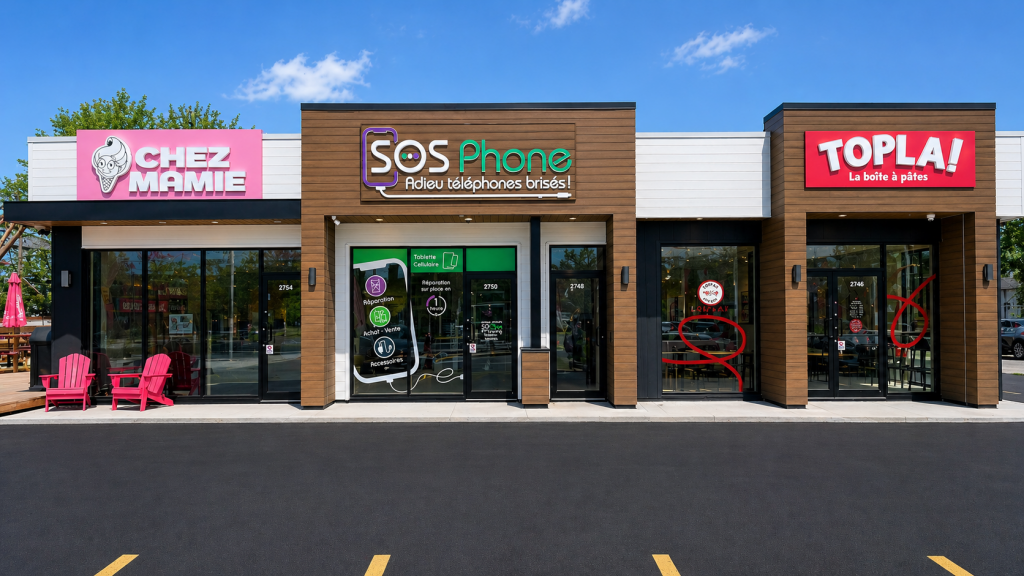
Alongside walk-in repairs and device sales, SOS Phone also runs an active B2B division. They support organizations that need devices back in circulation quickly. The workflow can handle business accounts, invoicing needs, and repeat intake without turning the front desk into a manual follow-up loop.
The Challenge
As SOS Phone’s repair volume grew, the pressure behind the counter changed. They tried a few ways of running operations before RepairDesk, starting with an app and later Acomba. The app could not manage inventory properly, and while Acomba handled invoicing, it was not built for repair shop realities like inventory management, color variations, commissions, and the day-to-day needs of a repair business.
The bigger issue was stability across locations. At one point, SOS Phone had five locations connected through VPNs to a dedicated server. When the system needed a reboot, which happened often, it hit every location at once and turned normal work into a stop-and-start day.
As Jessica puts it,
“Daily operations had become chaotic with the constant need for system reboots, while the entire inventory side was still not properly integrated.”
Eventually, it became clear they were outgrowing general tools. They needed one repair management system built for the realities of a high-volume shop, with inventory, tickets, and multi-location stability working together.
The Solution: RepairDesk Adopted As the Core System
A shop that wins trust year after year cannot run on tools that feel bolted together. SOS Phone needed a repair management system that matched how a real repair operation works. As the business grew, inventory, variations, staff control, and multi-location coordination started to matter just as much as the repair itself.
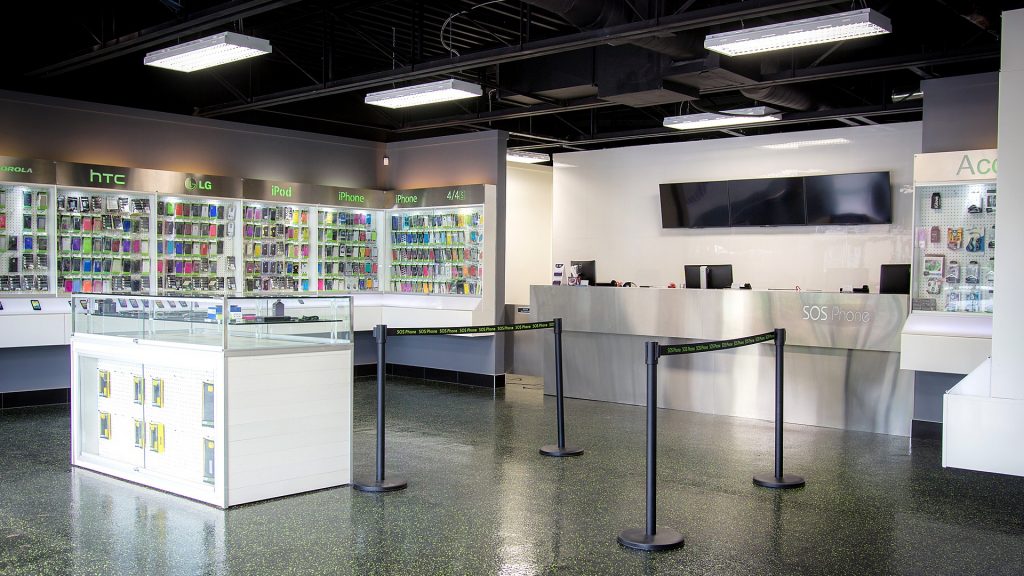
When they compared options, RepairDesk stood out as the most complete fit for what they needed. It covered the essentials, including inventory management, ease of use, staff access control, and repair tickets. Even with all that, the software still felt easy for the team to use. They adopted it early and have stayed with it as the platform continued to evolve over the years.
Looking back, Jessica describes it as something they now depend on to keep operations steady.
“Honestly, it would be very hard today to operate efficiently without RepairDesk.”
With RepairDesk in place, SOS Phone standardized the most important parts of the counter workflow in a way that the team could run consistently across the day.
1) Repair Tickets and Invoices Created at Intake
SOS Phone creates the repair ticket and invoice the moment a device comes in, and RepairDesk keeps that intake structured even when the counter is packed. That single record carries the job from check-in to pickup, so handoffs stay clean between the front desk and technicians. Since everything lives in one place inside their repair management system, the team can trace decisions and changes. They do not have to rely on memory or loose notes.
2) Digital Signatures for Clear Authorizations
Approvals stay clean because customer signatures are captured on iPads and stored right inside RepairDesk. That makes authorizations easy to verify later if a question comes up about what was approved or acknowledged at intake. It also removes the mess of paper forms and prevents small misunderstandings from turning into longer disputes. The workflow stays simple for staff while still protecting the customer experience.
3) In-Ticket Controls That Keep Bench Work Documented
Technicians stay consistent because RepairDesk keeps key details inside the ticket while the repair is in motion. Integrated tests, repair timers, and customer codes remain visible at the bench, which reduces missed steps when the pace is high. The smaller controls matter too, like adding a part or skipping it without breaking the flow, so documentation stays accurate without slowing the work down.
4) Ticket-Linked Status Checks and Automated Updates
Customers do not need to chase the front desk for updates because RepairDesk ties communication directly to ticket progress. SOS Phone can share an approximate completion time early to set expectations. When a ticket status changes, the system can trigger automatic SMS or email notifications for moments like needing extra information, needing authorization, or pickup readiness. That keeps trust high because the repair management system drives the updates, not manual follow-ups.
5) Inventory and Stock Management Built for Repair Variations
Inventory stops being guesswork because RepairDesk supports repair specific inventory realities that general tools struggled with, including variations and repair workflows. That inventory management clarity helps SOS Phone see what is in stock and where it sits, which matters in a fast turnaround shop. With better visibility in the repair management system, repairs stay predictable even during high volume days.
6) Inter-Store Inventory Transfers That Prevent Repair Delays
Parts do not stay trapped in the wrong store because RepairDesk supports inter-store inventory transfers as part of normal operations. That makes it easier to move stock to the location where demand is showing up, without losing track of what moved and why. Jessica specifically called out inventory, stock management, and transfers as areas that improved after adopting RepairDesk, which helped reduce interruptions mid-repair.
“The ease of day-to-day operations, better reporting, everything related to inventory, stock management, and inter-store inventory transfers, all changed since adopting RepairDesk. I would not change it.”
7) Reporting and Business Account Handling for B2B Work
SOS Phone can support business clients without turning the workflow into manual admin because RepairDesk supports flexible invoicing and account handling that fits B2B repairs. Customer grouping helps when pricing needs to be managed at an account level, and the reporting suite supports how leadership reviews performance and trends. As Jessica put it,
“The RepairDesk reporting tools are also very complete. We can review different types of data, whether sales, cash flow, performance, year-over-year comparisons, or phone sales versus repairs.”
The Results
For SOS Phone, the improvement showed up in how the shop runs day-to-day. Inventory and stock management became easier to control, inter-store transfers stopped feeling like a headache, reporting got stronger, and customer follow-up became simpler with texting and automated touchpoints built into the workflow.
Jesscia describes the change in a way that captures what it did for the operation overall.
“RepairDesk transformed our business nearly 10 years ago by making our operations far more efficient, organized, and suited to our day-to-day needs.”
That confidence also comes from the support experience. They shared that having a dedicated representative and strong follow-up helped them stay focused on serving customers instead of getting pulled into recurring system issues.
Here is what changed across the operation:
- easier control over inventory, stock management, and inter-store transfers
- better visibility through reporting across sales, cash flow, and performance
- smoother customer follow-up with texting and ticket-linked updates
- more consistent feedback collection through automated review requests after repairs
- the ability to operate efficiently with a smaller team while keeping service standards high
Looking Ahead
SOS Phone has grown by staying disciplined on what builds trust. This includes fast repairs, clear communication, and a consistent counter workflow that does not slip when the day gets busy. Next, the focus is keeping standards high across all locations. SOS Phone wants to remain the reference point for mobile device repair.
Technology will keep playing a bigger role in how repair shops run, and SOS Phone wants to lean into anything that reduces manual follow-up while keeping work organized and easy to track. RepairDesk remains central to that direction. The platform keeps evolving with new capabilities and integrations. That helps the team run with more consistency as expectations rise.
And if another shop owner asked whether RepairDesk is worth it, Jessica’s answer is straightforward.
“I would ask them what they are waiting for. They should go for it, because there is no way they would regret their choice.”
They have been using RepairDesk since 2016 and plan to keep it as their repair management system. It supports their push for even more consistency across the operation.


